Welcome to our website. Neque porro quisquam est qui dolorem ipsum dolor.

Lorem ipsum eu usu assum liberavisse, ut munere praesent complectitur mea. Sit an option maiorum principes. Ne per probo magna idque, est veniam exerci appareat no. Sit at amet propriae intellegebat, natum iusto forensibus duo ut. Pro hinc aperiri fabulas ut, probo tractatos euripidis an vis, ignota oblique.

Ad ius munere soluta deterruisset, quot veri id vim, te vel bonorum ornatus persequeris. Maecenas ornare tortor. Donec sed tellus eget sapien fringilla nonummy. Mauris a ante. Suspendisse quam sem, consequat at, commodo vitae, feugiat in, nunc. Morbi imperdiet augue quis tellus.
Showing posts with label China. Show all posts

KFC, Apple in China hit by South China Sea spat

View photos
In this photo taken on Tuesday, July 19, 2016 and released by Guo Lu, policemen stand watch Chinese people carrying national flags hold a protest outside a KFC restaurant outlet in Baoying county in east China's Jiangsu province. In an apparent attempt to head off large-scale street demonstrations, Chinese state newspapers have criticized scattered protests against KFC restaurants and other U.S. targets sparked by an international tribunal's ruling that denied Beijing's claim to virtually the entire South China Sea. (Guo Lu via AP)
BEIJING (AP) — To the challenges facing KFC and Apple in China, add a surprise backlash from Beijing's spat with the Philippines over the South China Sea.
Nationalists are protesting at KFC outlets and calling for a boycott, spurred by government accusations that Washington encouraged Manila to oppose Beijing's claims to vast tracts of ocean.
Photos circulated online show young Chinese wearing scarves with patriotic slogans smashing Apple iPhones in protest.
State media have fanned public anger with a torrent of criticism of last week's ruling by a U.N. tribunal, which found no legal basis for Beijing's claim to most of the South China Sea.
"The Chinese public, as optimistic and positive as they are, are deeply patriotic and nationalistic, especially people who are younger," said James Roy of the research firm China Market Research Group. KFC and Apple "are just very closely associated with the United States, and you are seeing people picking the closest symbol they can think of to demonstrate against."
The protests are a reminder of the political risks for global brands in China, where they regularly become targets of nationalist sentiment, often stirred up by official media.
In 2012, sales of Japanese autos plunged when Tokyo and Beijing were in a dispute over control of uninhabited islands in the East China Sea.
The Chinese leadership has tried to tamp down this week's protests with demands in state media to leave foreign companies and their customers alone.
"This is not the right way to express patriotism," said the government's Xinhua News Agency. The China Daily newspaper called the protests "jingoism that does a disservice to the spirit of devotion to the nation."
Some KFC customers have responded by posting photos of themselves online with a bucket of chicken, axes or other weapons and signs reading, "patriotic hooligans, try harassing me and I'll take you out."
Phone calls to spokespeople for KFC in China and written messages sent through the company website weren't answered.
A man in the eastern city of Yangzhou, northwest of Shanghai, said he watched a protest Tuesday morning after seeing a note online appealing to people to take part. He said it also told protesters to boycott Japanese and Korean goods.
"A group of more than 20 people including children broke into the restaurant and shouted at customers to leave," the witness, Guo Lu, said by phone from Yangzhou. He said police arrived quickly and pushed the protesters out of the restaurant.
The timing is unusually bad for KFC, which is China's biggest restaurant chain with more than 5,000 outlets but is overhauling its struggling business after a food scandal and marketing missteps.
KFC's owner, Yum Brands Inc., is preparing to spin off its China unit, which also includes Pizza Hut restaurants, as a separate company in October in hopes of improving its performance.
KFC has long been an all-purpose target for protests about U.S. issues, especially in areas outside big cities with few other foreign symbols. In 1999, after NATO jets bombed the Chinese Embassy in Belgrade, protesters wrecked KFC restaurants.
The company and other foreign chain restaurants in China also face an upheaval as customers migrate to fast-growing local competitors they say offer more nutritious meals.
For its part, Apple has faced a series of legal hurdles this year in China, its second-biggest market.
In April, it suspended its iBooks and iTunes Movies services, reportedly due to an order by Chinese regulators.
The next month, an intellectual property tribunal ordered Apple to stop selling its iPhone 6 and iPhone 6 Plus in Beijing after finding they look too much like a model made by a small Chinese brand. Apple was allowed to continue sales while it appeals.
Also in May, a court ruled a Chinese company is allowed to use the iPhone trademark on bags, wallets and other leather goods.
An Apple spokeswoman responded to a request for comment by pointing to CEO Tim Cook's positive comments in April about the company's future in China. Cook said Apple was "really optimistic" and planned to open five more stores in China during the current quarter for a total of 40.
Original post found here:
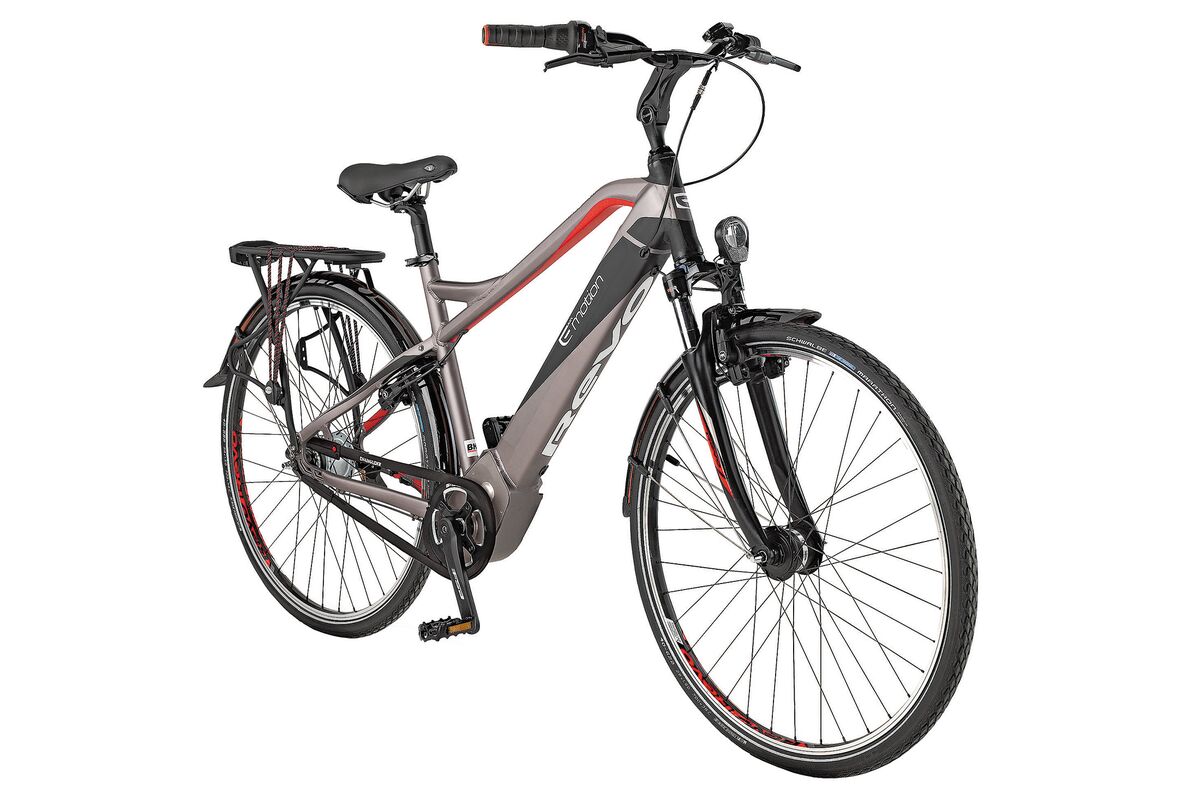
Electric Bikes Won Over China. Is the U.S. Next?


The vibe is buoyant at the headquarters of BH Bikes in Vitoria, a city in Spain’s Basque region. Founded in 1909 as an arms manufacturer, the company switched to bikes after World War I and introduced its first electric model in 2008. Today there are more than 60, ranging in price from about $1,300 to $5,200. “Growth has been tremendous,” says Mikel Quintana, head of the e-bike division, who expects to sell 20,000 this year, up 20 percent from 2015.
Across the Atlantic, Don DiCostanzo, the co-founder and chief executive officer of Pedego Electric Bikes, is also pumped. He anticipates his 30-employee company, based in Fountain Valley, Calif., will sell 10,000 of the brightly colored two-wheelers, which start at about $2,300, this year. “What’s critical is we built a distribution system with branded stores, just like Apple,” he says, referring to the company’s network of 83 Pedego dealerships.

The market for electric bikes is fragmented, with BH, Pedego, and dozens of other companies selling a multitude of models, ranging from elegant folding versions aimed at yacht owners to fat-tire monsters for weekend warriors such as hip-hop mogul Sean Combs, who showed off his at last year’s Burning Man festival. E-bike sales are expected to total $15.7 billion globally this year and reach $24.3 billion in 2025, according to Navigant Research. “It’s a category that is wide open,” says Edward Benjamin, senior managing director of ECycleElectric Consultants in Fort Myers, Fla., and chairman of the Light Electric Vehicle Association. “Little guys are jumping into a business that no one’s been paying attention to,” he says.
An e-bike is a bicycle with an electric motor. A rider can pedal without using the motor or use it for a boost. The motors in the U.S. are generally limited to a maximum of 20 miles per hour. Recreational riders and commuters can cover long distances and handle hills without breaking a sweat. Motorcycle bans have helped lead to massive e-bike adoption in China, where more than 200 million are in use, according to Benjamin. The country is also the world’s biggest e-bike manufacturer and exporter, with giants such as Jiangsu Xinri E-Vehicle and Yadea Technology Group each able to produce several million annually. Compared with Asia, North America is barely a blip—Navigant predicts only about 152,000 e-bikes will be sold in the region this year, though it expects steady growth. “I would guess 90 to 95 percent of people in the U.S. don’t even know what an electric bicycle is,” says Navigant analyst Ryan Citron, who uses one to get to his job in Boulder, Colo. Unlike Europe, which boasts multilane bicycle highways, the U.S. is “really set up to commute by car, not by bike,” making mainstream adoption “very challenging,” he says.
That hasn’t deterred ProdecoTech, an e-bike manufacturer based near Fort Lauderdale that opened an assembly plant in 2013 with the capacity to produce almost 300 bikes a day. It sold about 4,000 e-bikes in 2015 and plans to produce 8,000 to 12,000 this year under a new distribution deal with Dick’s Sporting Goods, according to Robert Provost, co-founder and CEO.
Electrics “finally have legs to be able to take off in the U.S.,” because cyclists are feeling safer on the roads, battery and motor technology is improving, and retail prices are dropping, says Todd Grant, president of the National Bicycle Dealers Association. However, e-bikes have been banned in some U.S. cities because of safety concerns. Some states’ vehicle laws lack specific classification for e-bikes, causing confusion among riders and police, says Morgan Lommele of PeopleForBikes, an advocacy organization that’s worked to get states including California, Utah, and Tennessee to pass pro-e-bike legislation. “Once we get the biggest opposition—often police departments—to ride e-bikes, they say, ‘What’s the big problem?’ ”

The U.S. market could develop “way faster” than Europe’s did, says Claus Fleischer, who heads Bosch’s e-bike division. The German multinational began selling motors and batteries for electric bikes in 2011 and now supplies more than 60 brands, primarily in Europe. It opened a subsidiary in Irvine, Calif., in 2014 and is sponsoring e-bike expos across the U.S., including one in Portland, Ore., that ran for three days in late May. The expo’s organizer is planning to stage five more events in U.S. cities this year. Attendees will have a chance to view a large array of brands and, perhaps more important, take some of the two-wheelers for a spin. “You have to sit on the e-bike, push the pedals, and feel how the motor amplifies your own power,” Fleischer says.
The bottom line: Makers of electric bikes are targeting the U.S., where sales are a fraction of those in Asia and Western Europe.

Source by...http://www.bloomberg.com/news/articles/2016-06-02/electric-bike-makers-woo-americans